The comparison
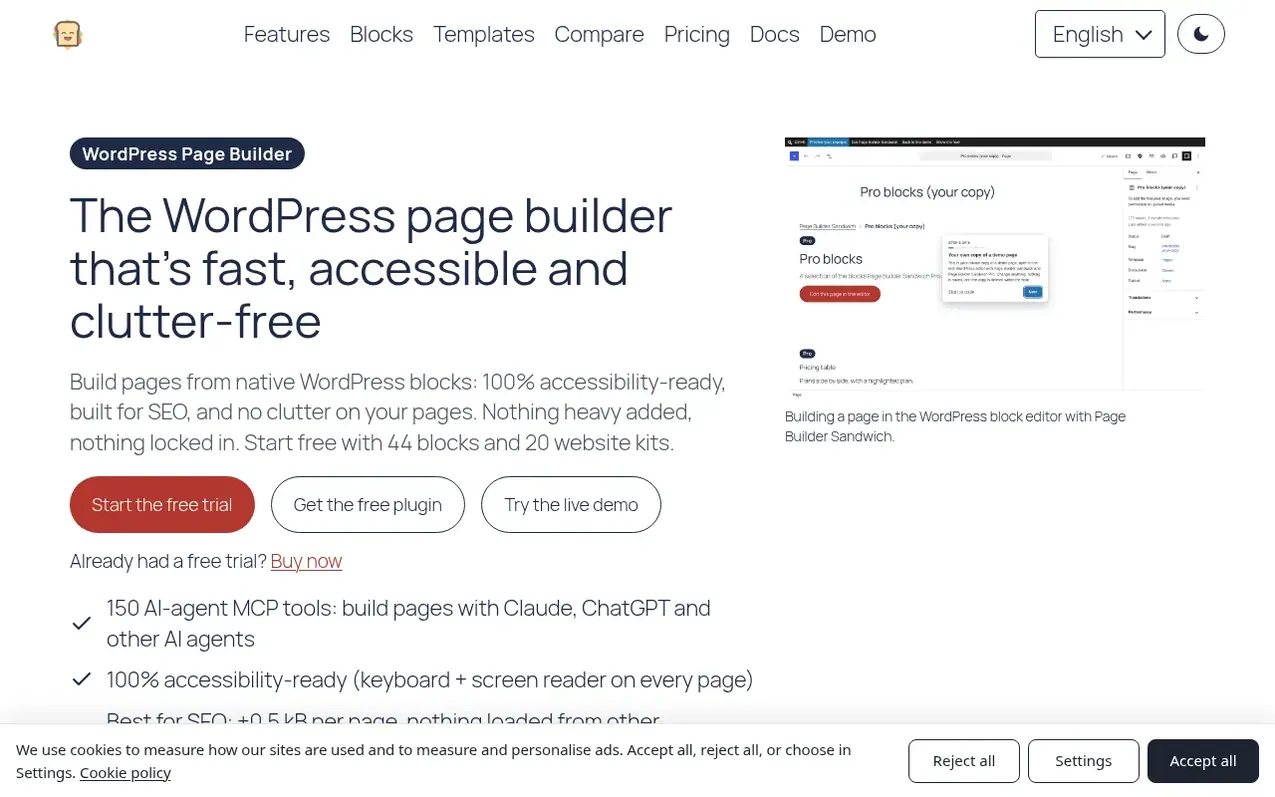
The comparison as Page Builder Sandwich wrote it.
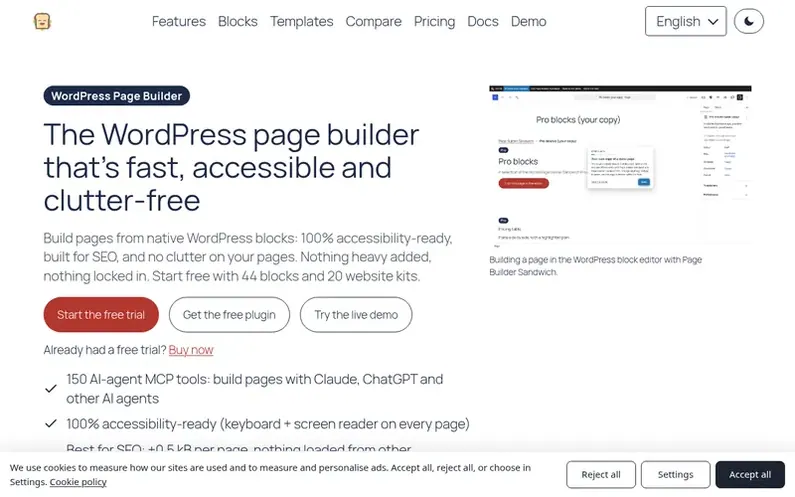
Elementor swaps out the standard WordPress editor for a drag-and-drop canvas that belongs to it alone. Page Builder Sandwich takes another route: you build within WordPress's block editor, or inside its own full-screen editor, and what gets stored is plain blocks. That keeps pages lighter to load and still readable if you ever remove the plugin.
- Page Builder Sandwich's strengths
Everything is stored as regular WordPress blocks, which means no single builder has a grip on your content.
Tested on one identical page, it added +0.5 kB and made no external requests, whereas the free Elementor plugin added +156.4 kB plus 3 requests to servers run by other companies.
You get the accessibility checker inside the free plugin.
The Pro version turns Elementor pages into blocks, and the original page stays exactly as it was.
- Elementor's strengths
Elementor offers a live visual drag-and-drop canvas, and plenty of WordPress users already know it well.
Its free plugin is sizeable, with lots of widgets covering headings, images, buttons and galleries.
- Shared ground
Each is a visual page builder for WordPress, offering a free plugin alongside paid plans.
Each lets AI tools get involved with the work on a website.
- Differences
Elementor does its building away from the block editor, while Page Builder Sandwich works within it.
On every page, Page Builder Sandwich brings in only the styles for the blocks actually used there, served from your own site.
Its MCP server hands AI agents like Claude 150 tools, and they stay within the limits of your WordPress permissions.